

Every year, somewhere around the end of the harvest, Nigeria starts counting again. The Nigeria Centre for Disease Control and Prevention publishes a weekly Lassa fever situation report, and by week 44 of 2026 that report had reached a familiar shape: 8,968 suspected cases, 1,186 confirmed cases and 278 deaths among confirmed cases, a case fatality rate of 23.4 percent across 26 states and 122 local government areas. For the same period of 2025 the figures were 966 confirmed cases and 177 deaths, a case fatality rate of 18.3 percent. The disease is not spreading into new territory so much as burning hotter in the places it has always been.
Lassa fever was first identified in 1969 in Nigeria and named after the town where the first cases occurred. More than half a century later it sits on the World Health Organization's list of priority pathogens for research and development in emergency contexts, alongside Ebola, Nipah and Disease X. There is still no licensed vaccine; the most advanced candidate, developed by IAVI, is in Phase 2a trials with volunteers in Nigeria, Liberia and Ghana. No antiviral drug is approved either, and the WHO notes that the efficacy and optimal dosing of ribavirin remain uncertain. What reliably improves survival is early intensive supportive care, which is another way of saying that the outcome is decided long before anyone reaches a treatment centre.
A virus that lives in the storeroom
The reservoir is Mastomys natalensis, the multimammate rat, a rodent so ordinary across West Africa that few people look twice at it. Infected rats do not become ill. They shed virus in their urine and faeces and carry on living where the food is. Humans are infected mainly through food or household items contaminated by that urine and faeces, or through direct contact with the rats themselves. Person to person spread happens, but it is much less common and occurs mostly in health care settings.
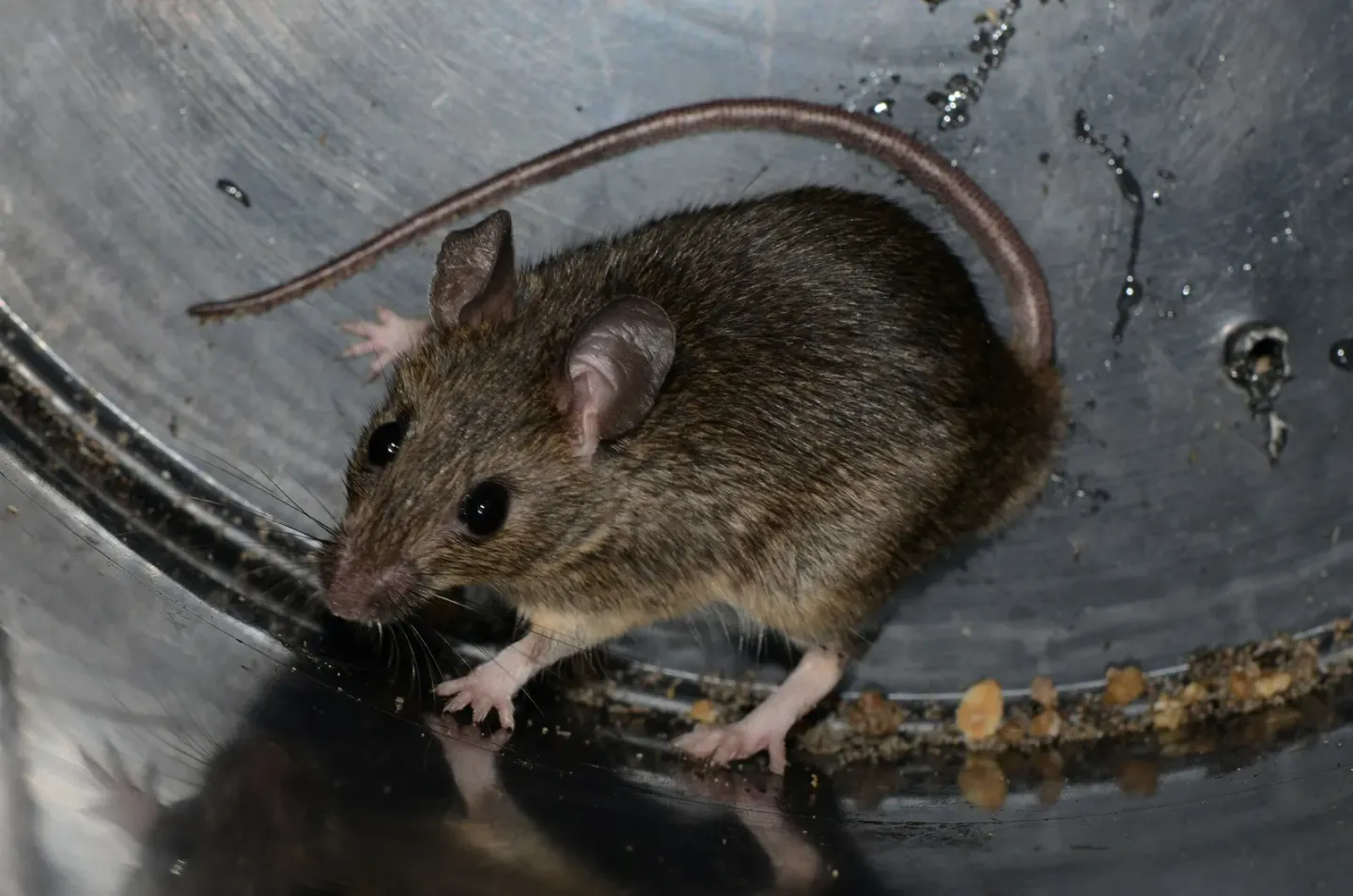
This is why Lassa fever has a season. The WHO describes transmission throughout the year, with large seasonal outbreaks during the dry season, typically from December to April. That calendar belongs to grain: when it is harvested, where it is dried, how long it sits in a room with a dirt floor before it is eaten or sold.
The evidence for that link is local and specific. A spatial analysis of confirmed cases in Edo State between 2008 and 2014, published in PAMJ One Health, found case locations significantly associated with proximity to refuse dumps, to rice post-harvest storage facilities and to rice farms. The authors' recommendation was not clinical. It was rodent proof rice storage, and keeping rice farmland away from homes. A separate study of rural households in Upper Guinea, published in Scientific Reports, found that the presence of rodent burrows carried the strongest association with rodent abundance indoors, followed by living in a multi-room square building and having more than eight holes in the dwelling. The authors singled out burrow patching as a low cost measure within reach of a household.
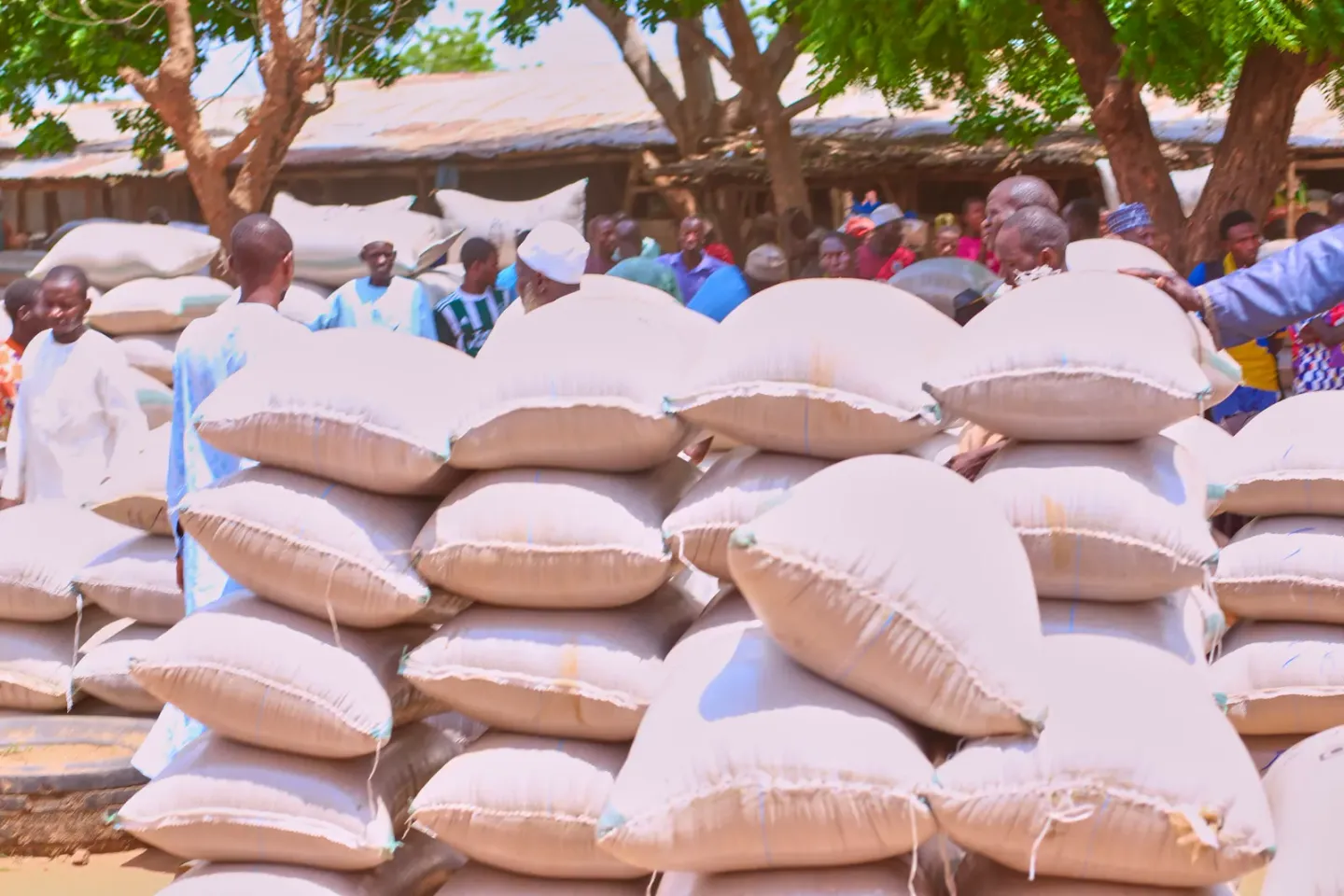
Put those findings together and the shape of the problem changes. Lassa fever is not transmitted by an exotic encounter with wildlife. It is transmitted by the ordinary architecture of rural food security: an unsealed store, a wall with holes in it, a refuse heap too close to the kitchen, a harvest that has nowhere safe to wait.
Most of it is never counted
The published numbers describe the tip of something larger. About 80 percent of people infected with Lassa virus have no symptoms or mild ones, and only about one in five develop severe disease. The overall case fatality rate is roughly 1 percent, while among hospitalised patients with severe disease it is 15 percent and above. The 23.4 percent Nigeria reports is therefore not a measure of the virus. It is a measure of who reaches a laboratory, and when.
Modelling work has tried to close that gap. A 2021 study in PLOS Computational Biology by Basinski and colleagues combined rodent ecology with human serosurveys and estimated roughly 897,700 human Lassa virus infections each year across West Africa, with more than half of them, about 531,700, occurring in Nigeria. The widely repeated older figure of 100,000 to 300,000 infections a year rests on serosurveys conducted in Sierra Leone in the 1980s. Both estimates are uncertain, and both are far above anything that appears in a weekly situation report.
Genomics has settled one question that used to haunt every upsurge. When Nigeria recorded its largest surge of cases in 2018, researchers sequenced patient samples in real time at Irrua Specialist Teaching Hospital in Edo State. The lineages they found were diverse and phylogenetically mixed with strains from earlier years, consistent with many independent zoonotic introductions rather than an emergent strain or extensive human to human transmission. The result, published in Science by Kafetzopoulou and colleagues, is reassuring and uncomfortable at once. Nobody needs to look for a new virus. The pressure is coming, repeatedly and from many directions, out of the rodent population that shares human housing.
Where the deaths are actually decided
The incubation period runs from 2 to 21 days, and the early symptoms are fever, headache, sore throat, muscle pain and vomiting, which in Nigeria in January could be almost anything. Among survivors, up to a quarter experience sudden hearing loss that is usually permanent.

The NCDC's own week 44 report for 2026 is unusually frank about why the fatality rate is rising. Under the heading of challenges, it lists:
Late presentation of cases leading to an increase in CFR. Poor health-seeking behaviour due to the high cost of treatment and clinical management of Lassa fever. Poor environmental sanitation conditions observed in high-burden communities. Poor awareness observed in high-burden communities. Healthcare workers infection. Stock out of laboratory reagents at ISTH testing centre.
Almost none of that list is about the virus. Cost determines when a family decides to travel. Awareness determines whether a fever in week one is read as malaria or as something that needs a test. Reagent supply at a single hospital determines whether a diagnosis is possible at all. The burden is also strikingly concentrated: 87 percent of all confirmed cases in 2026 came from five states, with Ondo alone reporting 37 percent, followed by Bauchi, Taraba, Edo and Benue. The predominant age group affected is 21 to 30 years, with a median age of 31.
What One Health actually changes
The One Health High Level Expert Panel defines One Health as an integrated, unifying approach that aims to sustainably balance and optimise the health of people, animals and ecosystems. Applied to Lassa fever, that definition stops being abstract very quickly, because it reassigns responsibility.
If most infections are independent spillovers from rodents living in and around houses, then the interventions with the largest upstream effect are not clinical. They belong to agriculture ministries thinking about post-harvest storage, to environment ministries thinking about waste, to housing standards, and to the extension officers who already visit farming communities. Nigeria has formalised some of this. A multisectoral prioritisation exercise convened with the federal ministries of health, agriculture and environment, the national veterinary research institute, universities, FAO, WHO and the US CDC selected six priority zoonotic diseases for the country. Lassa fever is one of them, alongside mpox, yellow fever, highly pathogenic avian influenza, rabies and bovine tuberculosis. The weekly situation reports show the machinery running: a national multisectoral technical working group, a joint One Health press briefing with the environment, livestock and agriculture ministries, and farmers and market women sensitised through the National Orientation Agency in Ondo State.
What One Health does not do is remove the hard part. Rodent proof storage costs money that smallholder households do not have, and the WHO is clear that complete elimination of Mastomys rats is not possible. The honest framing is narrower and more useful than the slogan: Lassa fever is a disease whose incidence is mostly set by agriculture and housing, and whose mortality is mostly set by health financing and diagnostics. Those are two different budgets, in two different ministries, measured by two different sets of indicators. Until the surveillance that counts rodents, the surveillance that counts grain losses and the surveillance that counts fevers are read in the same room, Nigeria will keep producing a very precise weekly account of a problem it is addressing one sector at a time.
Sources
- World Health Organization, Lassa fever fact sheet, 5 December 2024
- US Centers for Disease Control and Prevention, About Lassa fever
- Nigeria Centre for Disease Control and Prevention, Lassa fever situation report, epidemiological week 44, 2026
- World Health Organization, Disease Outbreak News, Lassa fever in Nigeria, 1 May 2023
- Basinski AJ and colleagues, Bridging the gap, PLOS Computational Biology, 2021
- Kafetzopoulou LE and colleagues, Metagenomic sequencing at the epicenter of the Nigeria 2018 Lassa fever outbreak, Science, 2019
- Amifofum OS and colleagues, Spatial analysis of confirmed Lassa fever cases in Edo State, Nigeria, PAMJ One Health, 2021
- Clark J and colleagues, Domestic risk factors for increased rodent abundance in a Lassa fever endemic region of rural Upper Guinea, Scientific Reports, 2021
- US CDC, Prioritizing Zoonotic Diseases for Multisectoral One Health Collaboration in Nigeria, workshop summary, July 2026
- World Health Organization, Tripartite and UNEP support OHHLEP's definition of One Health, 1 December 2021
- World Health Organization, Prioritizing diseases for research and development in emergency contexts
- IAVI, Lassa virus vaccine programme